
ΨΥΧΗ The Greek Word for Soul
Where Breath Becomes Soul
The Greek Word for Soul
The Greek word ψυχή, pronounced psee-HEE, is usually translated as soul.
But ψυχή carries more than one meaning. It speaks of breath, life, spirit, heart, courage, character, and the invisible depth of a human being.
Its story reaches back into the ancient Greek world, from the age of oral poetry and myth to the classical period of Athens in the 5th and 4th centuries BCE. And yet, it still lives in modern Greek today.
To learn ψυχή is not only to learn a word.
It is to follow a meaning that traveled through time.
From breath.
To myth.
To memory.
To the living courage of the human soul.
A Word Shaped by Breath
Before the soul became a great question of philosophy, it was breath.
A living body breathed.
A silent body did not.
Breath was the first sign of life, the invisible movement that showed something within the body was present, alive, and mysterious.
In this early sense, ψυχή belonged to the border between the visible and the invisible. You could see the body. You could hear the breath. But the force that made life present remained hidden.
This is why ψυχή became such a powerful word.
It named what could not be held.
The unseen self.
The inner presence.
The quiet flame beneath action.
A Word Born in a Land of Sea and Story
Greece was shaped by sea and stone, mountain and island, sunlight and shadow.
Its stories traveled before they were written down. They moved through voices, songs, rituals, homes, harbors, and gatherings. People told stories of gods, heroes, journeys, love, loss, hospitality, longing, and return.
In such a world, words did not only describe life.
They carried memory.
The Greek landscape itself seemed to teach contrast. The sea promised journey. The mountains taught endurance. The islands held both beauty and separation. The temples lifted human eyes toward something greater than ordinary life.
Through this world, ψυχή became more than breath.
It became the part of a person that feels, remembers, suffers, loves, hopes, chooses, and endures.
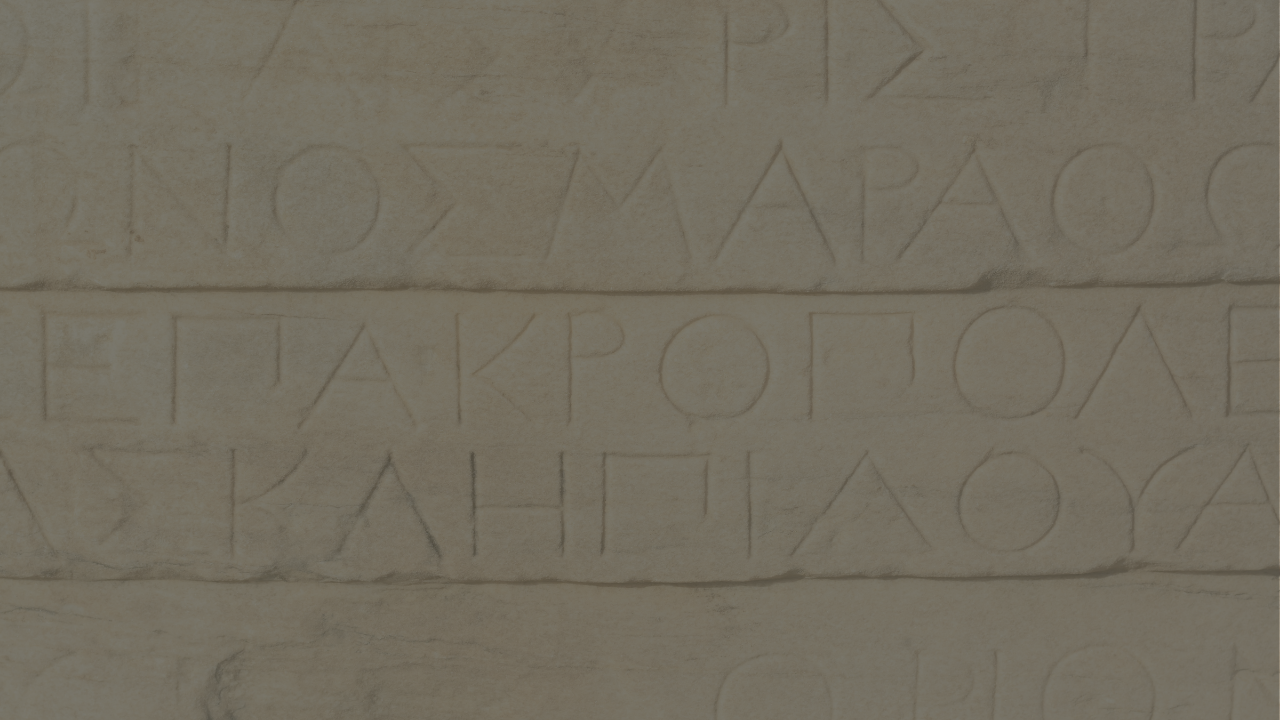
Ancient Greek letters carved in marble, where language, memory, and stone still speak across time.
The Soul in Greek Life
In modern Greek, ψυχή is still deeply human.
It can mean soul, but it can also suggest heart, courage, generosity, and inner strength. To say that someone has ψυχή is to say they carry something alive and powerful within them.
A parent who sacrifices quietly has ψυχή.
A friend who stays during sorrow has ψυχή.
A person who begins again after hardship has ψυχή.
An everyday hero who chooses love over indifference has ψυχή.
This is why ψυχή feels so close to what it means to truly honor someone.
Because when we honor someone, we are not only recognizing what they did.
We are recognizing the soul behind the action.
From One Word to One Civilization
To learn ψυχή is to enter the Greek way of asking one of humanity’s oldest questions.
What is the invisible part of us that loves, suffers, remembers, hopes, and endures?
This week, our journey through the Greek soul begins with one word.
On Wednesday, in HeroAnalysis, we meet Odysseus, the soul that longed for home.
On Friday, in SoulSynthesis, we turn to Plato, and the soul’s search for truth beyond shadows.
One word.
One hero.
One thinker.
Together, they open a door into Greece.
And now, SoulSpeaker, we ask you.
Can you say ψυχή?
How does your language speak of the soul?