
Odysseus The Greek Hero of the Long Return
The Soul That Longed for Home
A Hero After Victory
Odysseus belongs to the mythic world of ancient Greece.
His story is told in Homer’s Odyssey, an epic poem usually placed around the 8th century BCE, though the world it remembers reaches back to an older heroic age of warriors, kings, sea journeys, and divine tests.
But Odysseus was not only a hero of adventure.
He was a soul stretched across distance.
After Troy, after war, after victory, he did not seek another crown. He did not ask for more glory.
He wanted one thing with the simplicity of hunger.
He wanted home.
The Inner Wound of Distance
Ithaca was not only an island.
It was his wife, his son, his name, his memory, his place in the world.
It was the life waiting behind the legend.
The truth beneath the hero.
And yet, the journey home became the longest test of his soul.
The sea did not only separate Odysseus from Ithaca.
It separated him from certainty.
Every island, every storm, every danger, every temptation asked him who he really was when no one could see him clearly.
Who are you when glory is gone?
Who are you when no one praises you?
Who are you when the way home disappears?
Cleverness and Pride
Odysseus survives because he thinks.
He watches.
He listens.
He adapts.
He waits.
His intelligence is not decoration. It is survival.
He knows when to speak, when to hide, when to invent, and when to endure.
But Odysseus is not perfect.
That is why he remains so human.
He is clever, but sometimes proud.
Patient, but sometimes reckless.
Loyal to home, but still vulnerable to temptation.
He wants to return, but the journey reveals how difficult it is to remain faithful to yourself when the world keeps pulling you away.
This is the soul of Odysseus.
Not flawless.
Persistent.
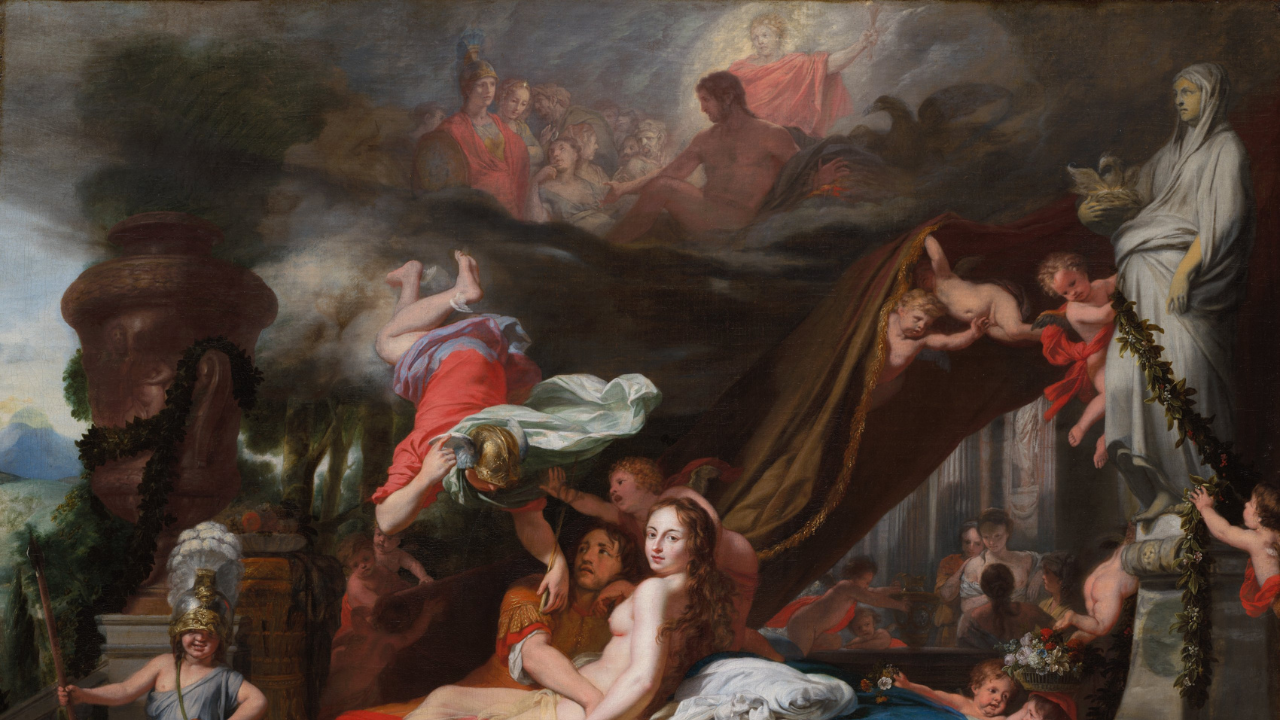
Hermes commands Calypso to release Odysseus, allowing the hero’s journey back to Ithaca to begin.
The Long Test of the Soul
His greatness is not only that he defeats monsters.
It is that he keeps moving through fear, loss, exhaustion, pride, and longing.
Every trial leaves a mark.
Every delay tests his memory of home.
Every danger asks him whether he still knows the way back.
The Odyssey still speaks because many people live their own version of it quietly.
A person recovering from illness.
A parent carrying the weight of a family.
A migrant searching for safety.
A survivor rebuilding life after loss.
A soul trying to return to itself after fear, grief, failure, or exile.
The monsters have different names now.
The storms arrive in different forms.
The distance is not always measured by the sea.
But the inner question remains.
Can the soul remain faithful to what matters when the journey becomes long?
The Everyday Odyssey
His journey reminds us that heroism is not always public.
It is not always a single brave moment seen by others.
Sometimes, heroism is the long return.
The quiet refusal to give up.
The strength to remember love after suffering.
The courage to keep walking toward the place where the soul is still known.
Odysseus reminds us that the hero is not only the one who conquers.
The hero is also the one who returns.
Not unchanged.
Not unwounded.
Not innocent.
But still carrying the memory of home.
The Call of Ithaca
Every soul has an Ithaca.
A place, a person, a promise, or a truth that keeps calling it back.
Odysseus reminds us that heroism is not only found in victory.
Sometimes, it is found in the long return.
In the refusal to forget who we are.
Even after the storm.